
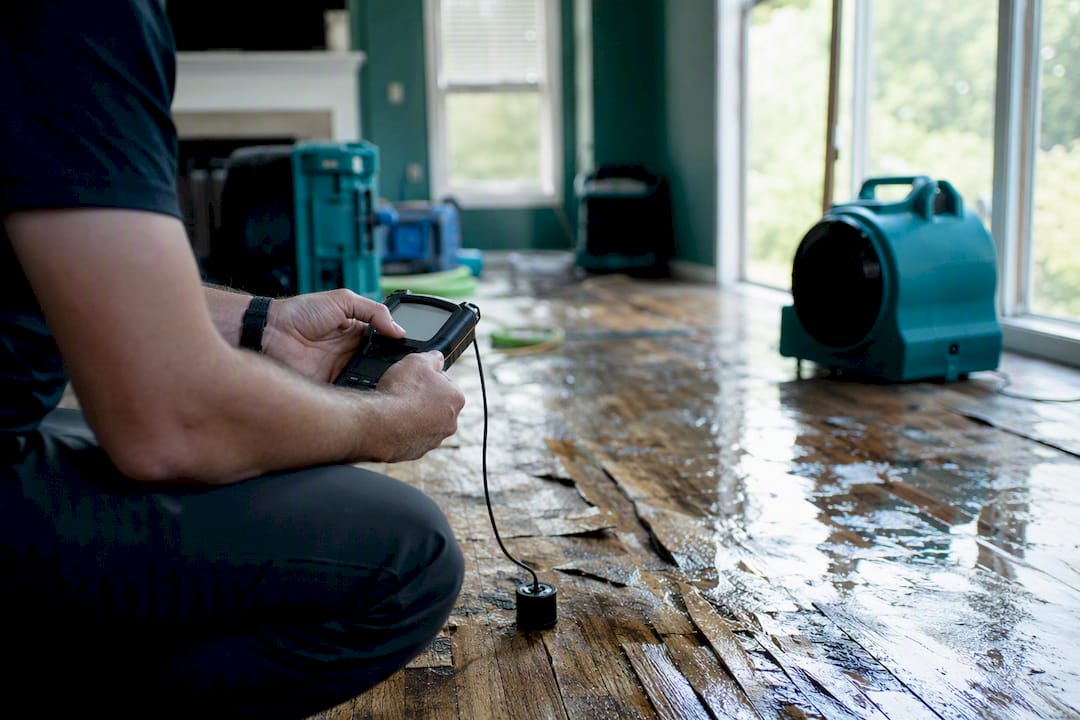
Category 3 water is contaminated water, often called black water, that contains sewage, chemicals, or other agents capable of causing serious illness. It includes toilet backflow with fecal matter, floodwater from rivers or storm surge, and any water that has sat stagnant for more than 48 to 72 hours. If you’re looking at it right now, the correct move is simple: get everyone and every pet out of the affected area, avoid touching or breathing near the water, and call a licensed restoration company that follows the IICRC S500 standard. Call emergency services too if there’s electrical hazard or structural risk.
Most porous materials the water touched, carpet, drywall, insulation, upholstery, are likely headed for the dumpster, not the cleaning cart.
- Evacuate the space immediately, including pets
- Don’t touch, wade through, or attempt to clean the water yourself
- Call a certified restoration company and, if there’s a safety hazard, emergency services
Key Takeaways
Category 3 water requires immediate evacuation, professional remediation under IICRC S500 protocols, and thorough documentation to protect both health and insurance claims.
| Point | Details |
|---|---|
| Identify Category 3 correctly | Sewage, floodwater, and water standing over 48 to 72 hours all qualify as black water. |
| Separate category from class | Category measures contamination; class measures saturation extent, and both drive the remediation plan. |
| Act fast, but safely | Evacuate, shut utilities only if safe, and never attempt to clean porous materials yourself. |
| Document everything early | Photos, timestamps, and a professional moisture map strengthen insurance claims significantly. |
| Call a certified contractor | Infinityrestoration offers 24/7 response, moisture mapping, and licensed mold assessment for Orlando properties. |
Standards and Agencies Worth Bookmarking
- IICRC S500 for official category and class definitions
- Mass on water damage response
- CDC E. coli guidance for pathogen risk details
- FEMA flood insurance for coverage basics
Table of Contents
- What’s the Difference Between Water Damage Category and Class?
- What Causes Category 3 Water Damage?
- Who’s Most at Risk From Category 3 Exposure?
- What Should You Do in the First Hour After a Category 3 Event?
- How Do Professionals Handle Category 3 Cleanup?
- Will Insurance Cover Category 3 Water Damage?
- How Can You Prevent Category 3 Water Damage?
- Why Trust Infinity Restoration With a Category 3 Loss?
- Sources
What’s the Difference Between Water Damage Category and Class?
“Category” and “class” answer two different questions, and mixing them up is the most common mistake homeowners make when describing a loss to an insurer or a contractor. Category describes how contaminated the water is. Class describes how much of the structure it soaked into and how hard it will be to dry.
The IICRC S500 breaks category into three tiers:
- Category 1: Clean water from a supply line or appliance, no meaningful contamination.
- Category 2: Gray water with some contaminants, like a washing machine overflow or a toilet with urine only.
- Category 3: Grossly contaminated water, sewage, floodwater, or anything carrying pathogens and toxins.
Class works on a separate scale from 1 to 4, based on how much moisture the air in the space has to give up during drying. A Class 1 loss might just need a fan and a dehumidifier for a day. A Class 4 loss, water trapped in plaster, brick, or hardwood, can take specialized low-grain refrigerant equipment and over a week to dry properly. A crew that classifies a loss as Category 3, Class 2 will bring dramatically different containment and disposal decisions than one classified as Category 2, Class 4. Get either number wrong and you either overpay for demolition that wasn’t needed or underprotect a home that needed it.
What Causes Category 3 Water Damage?
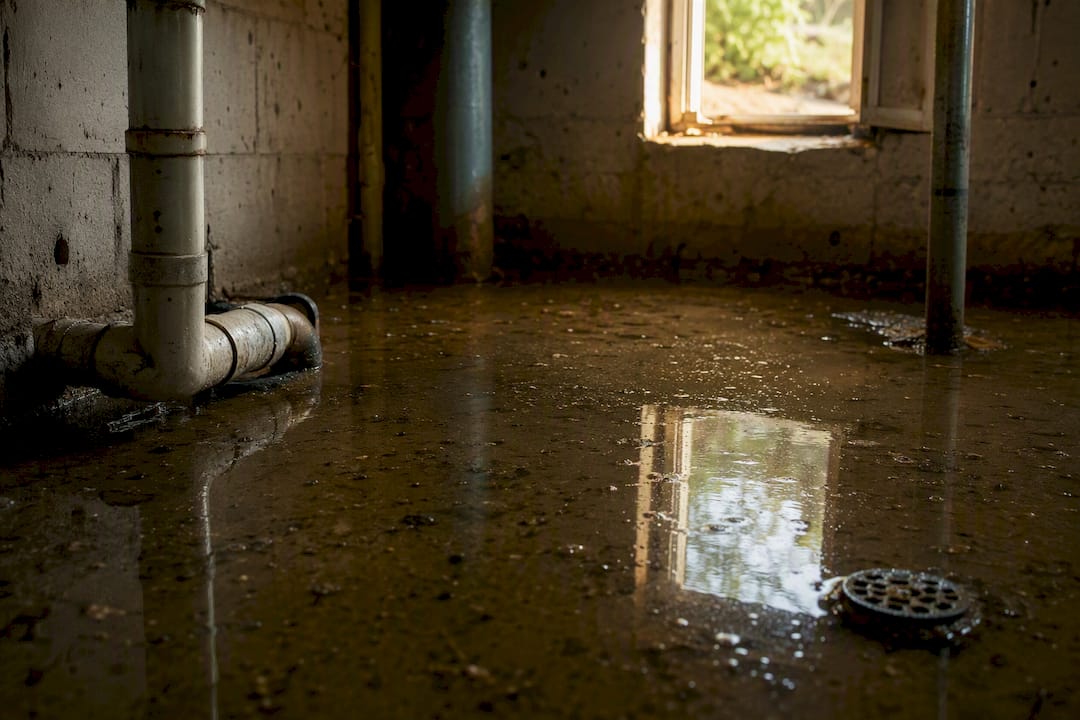
Sewage backups top the list, whether from a municipal line failure or a clogged main that pushes waste back into your home. Rising floodwater from a river, stream, or storm surge counts as Category 3 the moment it crosses your threshold, regardless of how clear it looks, because it has traveled over roads, lawns, and drainage systems on the way in. Toilet overflow involving fecal matter is Category 3 from the first drop.
Time turns lesser water into a bigger problem, too. Category 1 or 2 water left standing for 48 to 72 hours starts breeding bacteria and fungus fast enough to reclassify as Category 3.
- A basement sewer backup during heavy rain
- Wind-driven rain pushing through a window well into a finished basement
- Groundwater intrusion through foundation cracks after prolonged flooding
- A slow supply line leak nobody noticed for three days
Who’s Most at Risk From Category 3 Exposure?
Category 3 water can carry E. coli, along with hepatitis A, norovirus, and parasites, plus non-biological hazards like heavy metals and pesticide residue washed in from outside. Exposure happens through skin contact, splashing near the mouth or eyes, or breathing in aerosolized particles once the water starts drying and off-gassing.
Children, pregnant women, older adults, and anyone with a compromised immune system or open wound face the highest risk of serious illness from even brief contact. Short-term effects range from gastrointestinal illness to skin infections; prolonged exposure without proper remediation raises the odds of respiratory issues tied to secondary mold growth.
Pro Tip: If anyone in the household develops fever, vomiting, or a skin rash after contact with the water, treat it as a medical issue first and call a doctor before you worry about the cleanup.
Anyone without protective gear should stay out of the affected rooms entirely until a professional clears the space.
What Should You Do in the First Hour After a Category 3 Event?
The first hour sets the tone for everything that follows, including how smoothly your insurance claim goes. Work through this order:
- Move everyone, including pets, out of the affected rooms and close doors behind you to slow the spread.
- Shut off utilities only if you can do so safely from a dry, unaffected area. Never wade into standing water to reach an electrical panel.
- Leave porous materials alone. Don’t try to mop, vacuum, or scrub anything.
- Limit airflow, don’t run central air or fans that pull air from the contaminated zone into the rest of the house.
- Call a licensed restoration company first, and your insurer shortly after.
Once people are safe, documentation becomes the priority:
- Photograph and video every affected room, including baseboards, walls, and flooring
- Note the date and time water was first discovered
- List damaged belongings as you see them, even roughly
- Save any receipts related to emergency mitigation
Our step-by-step Orlando guide walks through this same sequence with more detail if you want a printable checklist on hand.
How Do Professionals Handle Category 3 Cleanup?
A certified crew starts with assessment and moisture mapping, using meters to chart exactly how far the water traveled behind walls and under flooring, which becomes the backbone of both the drying plan and the insurance report. From there, the work follows a fairly consistent sequence:
- Containment barriers and negative air machines with HEPA filtration keep contaminated air from spreading to unaffected rooms
- Technicians work in full PPE, respirators, gloves, and protective suits, given the pathogen load
- Porous materials, carpet, drywall, insulation, are selectively demolished and bagged for disposal rather than cleaned
- Nonporous surfaces, tile, sealed concrete, some structural framing, get disinfected with antimicrobial treatments
- Drying equipment runs until moisture readings hit target levels, followed by post-remediation clearance testing
Pro Tip: Ask any contractor bidding on the job whether they’ll provide a written clearance report once drying is complete. If they hesitate, that’s a red flag, not a formality.
A straightforward residential Category 3 loss typically moves from assessment to clearance in five to ten days; commercial or large-scale losses run longer depending on how much demolition is involved.
Will Insurance Cover Category 3 Water Damage?
Coverage hinges entirely on where the water came from, not how bad the damage looks. A sudden plumbing failure, like a burst supply line that backs up into gray or black water, is often covered under a standard homeowner policy. Floodwater and many sewer backup scenarios are a different story: standard policies routinely exclude flood damage outright, and sewer backup frequently requires a separate endorsement you may not have purchased.
This is exactly why documentation matters so much. Adjusters want to know the source, when it happened, and what remediation steps followed, and a professional mitigation report built on moisture maps and technician notes carries far more weight than a homeowner’s account after the fact.
- Ask your insurer directly whether your policy includes sewer backup or flood endorsements before you need them
- Request an IICRC-based technician report, not just a repair invoice
- Keep disposal manifests for anything demolished, they prove what was removed and why
Our restoration blog covers documentation strategy in more depth if you’re building a claim file from scratch.
How Can You Prevent Category 3 Water Damage?
A backflow preventer installed on your main sewer line stops municipal backups from reaching your home, and it’s one of the cheapest insurance policies you can buy relative to the damage it prevents. Pair it with a sump pump that has a battery backup, since power outages during storms are exactly when sump pumps matter most.
Schedule plumbing inspections annually rather than waiting for a failure, and seal foundation cracks and window wells before storm season rather than after. Grading your yard so surface water flows away from the foundation, not toward it, prevents the kind of slow groundwater intrusion that turns into a Category 3 problem over a few wet weeks.
- Install and test a backflow preventer on sewer lines
- Keep a sump pump with battery backup and test it quarterly
- Inspect plumbing annually, especially aging cast iron or clay lines
Pro Tip: Keep your restoration company’s number saved in your phone before you need it. In a Category 3 event, the hours you spend searching for a contractor are hours the contamination keeps spreading.
Why Trust Infinity Restoration With a Category 3 Loss?
Infinityrestoration is an Orlando-based restoration company built around water, fire, and mold damage for homes and businesses. The team uses advanced moisture mapping to document contamination and drying progress, and keeps a Florida Licensed Mold Assessor on staff, a credential most restoration outfits in the area don’t carry.
- 24/7 emergency response designed to limit how far Category 3 contamination spreads before containment starts
- Real-time documentation built specifically to support insurance claims, not just internal recordkeeping
A Simple Rule of Thumb for Judging Contaminated Water
. If water has stood for more than 48 hours or carries any sewage smell, treat it as Category 3 and call professionals immediately.
Getting Emergency Help for a Category 3 Event
Once you’ve confirmed contaminated water in your home or business, the clock matters more than almost anything else. Infinityrestoration answers Category 3 calls around the clock, and the same moisture mapping technology used to document the loss for insurers is also what tells the crew exactly how far containment needs to extend before they start demolition.
That combination, fast arrival plus a documented, standards-based process, is the difference between a claim that gets approved smoothly and one that drags out over disputed scope. Every job follows IICRC S500 protocols, and the team’s Florida Licensed Mold Assessor status means secondary mold growth gets caught and addressed rather than discovered months later.
If you’re facing an active sewage backup, flood intrusion, or any water that’s been standing for more than two days, visit the emergency water damage restoration page or reach out through the commercial water damage emergency steps guide if the loss is at a business property. Getting a crew on-site today is the single best thing you can do for both your health and your claim.
Sources
- IICRC S500
- Mass
- CDC — E. coli information
- FEMA — flood insurance
- Haag Global — Water mitigation guidelines