
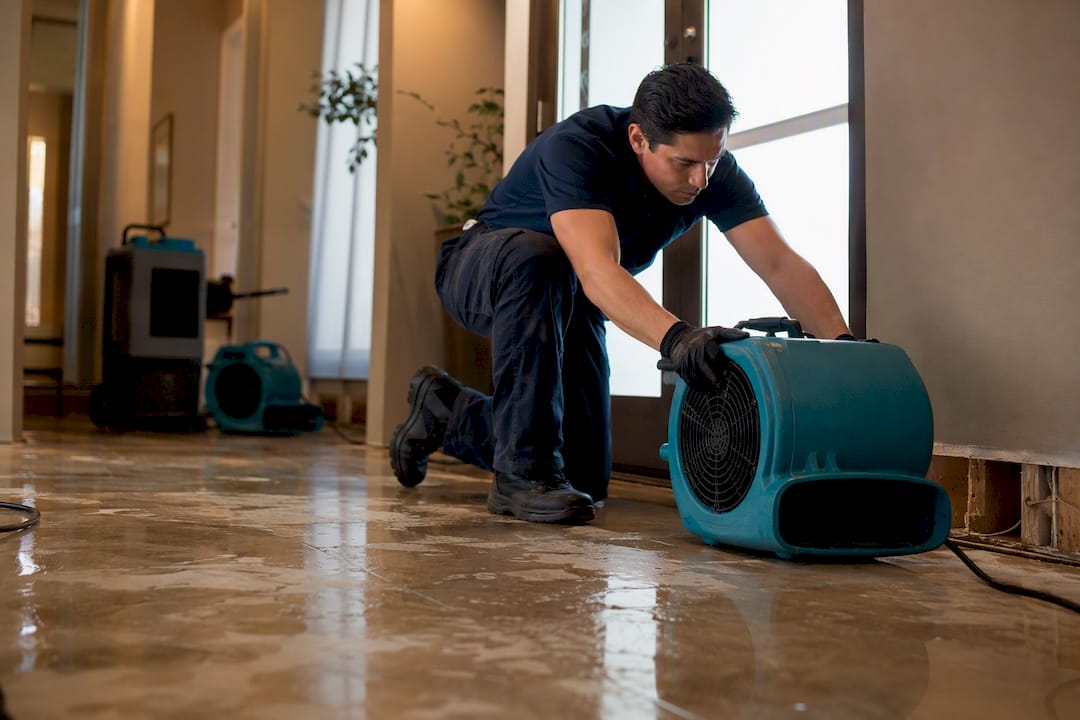
Shut off your main water supply first, then worry about everything else. Cut power to any affected area if you can reach the panel safely, open faucets and flush toilets to bleed off trapped pressure, and start photographing the damage before you touch anything. Every minute a burst pipe keeps running adds gallons to your cleanup bill and pushes you closer to the 24 to 48 hour window when mold starts colonizing wet drywall and insulation.
Here’s the sequence that matters most:
- Find your main shutoff valve (near the water meter or where the line enters the house) and turn it clockwise until it stops.
- Kill power to the wet area at the breaker box, or leave the house and call an electrician if water is near outlets or the panel itself.
- Open every faucet and flush toilets on the lowest level to drain the remaining pressure from the pipes.
- Contain what’s already on the floor with towels or a wet/dry vac, and shoot photos and video before you start moving things.
Pro Tip: Keep a $30 wet/dry vacuum in the garage year round. It’s the single cheapest insurance policy against a burst pipe turning into a five-figure claim.
Key Takeaways
Fast action in the first hour, paired with documented drying and moisture mapping, is what actually limits the total cost of burst pipe water damage.
| Point | Details |
|---|---|
| Shut off water immediately | Turn off the main supply and open faucets to relieve trapped pipe pressure before doing anything else. |
| Watch for hidden signs | Pressure drops, hissing sounds, and rising water bills often precede visible flooding. |
| Document before cleanup | Photograph and video every room before moving furniture or starting extraction. |
| Beat the mold clock | Mold can begin colonizing wet materials within 24 to 48 hours, so drying speed matters more than technique. |
| Call professionals at clear thresholds | Multi-room flooding, electrical risk, or structural sagging all warrant an immediate call to a crew like Infinity Restoration. |
Table of Contents
- How Do You Detect a Burst Pipe Before It Floods a Room?
- What Should You Do in the First Few Hours After a Pipe Bursts?
- When Is a Burst Pipe Too Dangerous to Handle Yourself?
- How Do You Dry a Structure Correctly After a Burst Pipe?
- What Do Insurance Companies Expect When You File a Burst Pipe Claim?
- How Can You Prevent a Burst Pipe Before It Happens?
- What Does a Professional Restoration Team Actually Do Differently?
- Get Emergency Help When a Pipe Bursts in Your Home
- Sources
How Do You Detect a Burst Pipe Before It Floods a Room?
The damage you can see is rarely the whole story. Standing water, a bulging or stained ceiling, and carpet that squishes underfoot are the obvious tells, but plenty of burst pipes announce themselves in quieter ways first.
Watch for these warning signs:
- A sudden drop in water pressure at every faucet in the house, not just one fixture.
- Hissing, gurgling, or rushing sounds coming from inside walls or under the floor.
- A water bill that jumps with no change in usage.
- Musty smells in a room where nothing looks visibly wet.
Water expands roughly 9% when it freezes, and that pressure often ruptures a pipe several feet from where you actually see the leak. Water travels along joists and behind drywall before it ever pools where you’re standing, so the visible puddle is usually the smallest part of the problem, not the biggest.
What Should You Do in the First Few Hours After a Pipe Bursts?
Once the main is off and the immediate danger is handled, the next one to three hours decide how big this gets. Work through these steps in order:
- Confirm the leak has actually stopped. Check that your main shutoff worked and that faucets have run dry. If water keeps flowing, you likely have a second break or a failed valve, and it’s time to call an emergency plumber.
- Handle electrical risk properly. Cut power to the wet zone only if the breaker panel is dry and accessible. If it isn’t, leave the area and call an electrician or 911 rather than risk it yourself.
- Move anything that can be moved. Get furniture, electronics, rugs, and important documents out of the wet zone. Anything you can’t move, prop up on blocks or foil to keep it off a soaked floor.
- Start pulling water out immediately. Towels and buckets work for small amounts; a wet/dry vac or a rented sump pump handles the rest. Never run a standard household vacuum on standing water. Homeowners consistently underestimate how fast a burst line moves water through a house, which is exactly why speed here matters more than technique.
- Document before you clean. Timestamped photos and a walkthrough video of every affected room, taken before you move furniture or mop anything up, become your leverage with the insurance company later. Save every receipt, from the shop vac rental to the hotel room if you can’t stay in the house.
Pro Tip: Text yourself the photos as you take them. Phones get dropped in floodwater more often than people admit, and a cloud backup means you never lose your evidence.
When Is a Burst Pipe Too Dangerous to Handle Yourself?
Standing water and electricity are a bad combination, full stop. Never wade into a flooded room if there’s any chance an outlet, appliance, or the panel itself is submerged or wet. If you see sparks, smell burning, or notice charring near an outlet, get everyone out and call an electrician or 911 immediately, not a handyman.
Beyond electrical risk, a few thresholds mean it’s time to stop DIY-ing and call in a restoration crew or plumber:
- Water is actively flowing from a pressurized supply line, not just draining out of what’s already spilled.
- More than one room is affected, or standing water is deeper than a couple of inches.
- You notice a sagging ceiling, swollen or spongy flooring, or any water near the electrical panel.
How Do You Dry a Structure Correctly After a Burst Pipe?
Mopping up the visible water is the easy part. Drying the structure so mold never gets a foothold is where most DIY cleanups fall short, because wet materials that look dry to the eye often aren’t.
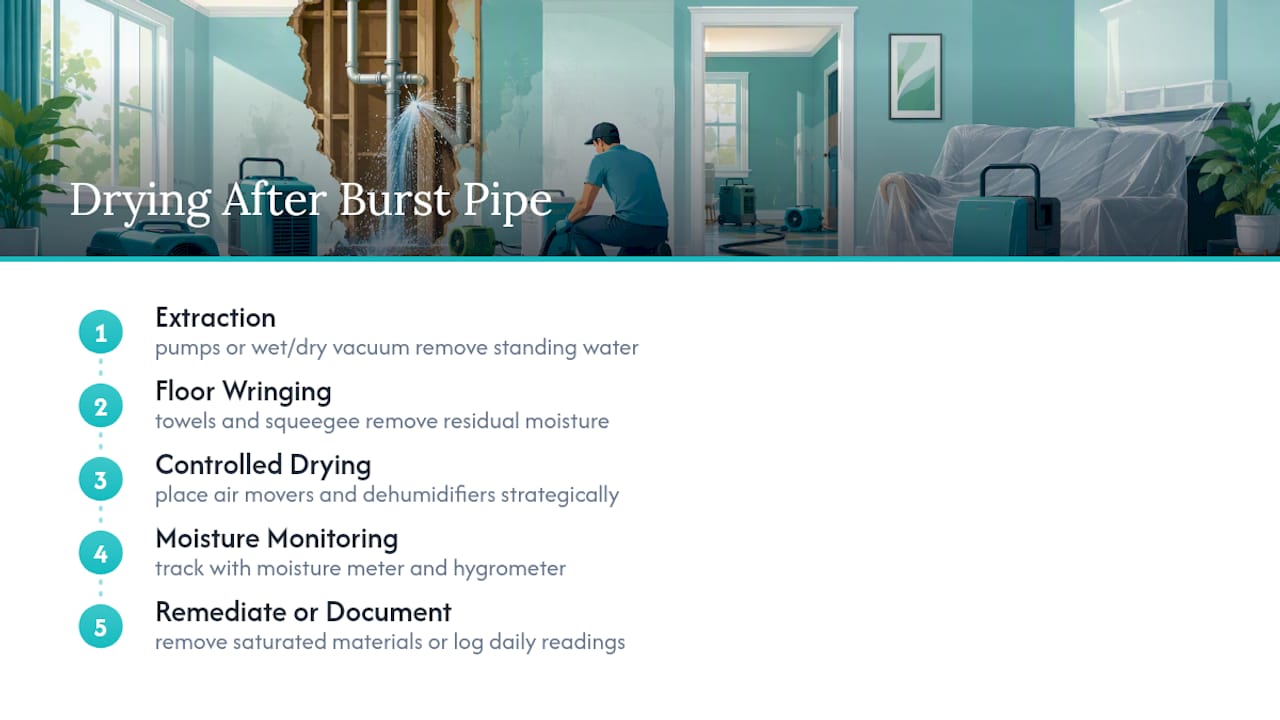
Extraction comes first: pull standing water out fast with pumps or a wet/dry vac, then work residual moisture out of carpet and hard flooring with towels and a squeegee. After that, the job shifts from cleanup to controlled drying. Air movers and dehumidifiers get placed strategically around the wet zone, and the only way to know when a space is actually dry is to track it with a moisture meter and hygrometer until the readings return to baseline, not just until the room feels dry to the touch.
Mold doesn’t wait for you to finish cleaning. It can begin colonizing wet drywall, insulation, and subfloor within 24 to 48 hours, which is why professionals treat the clock as the enemy from minute one.
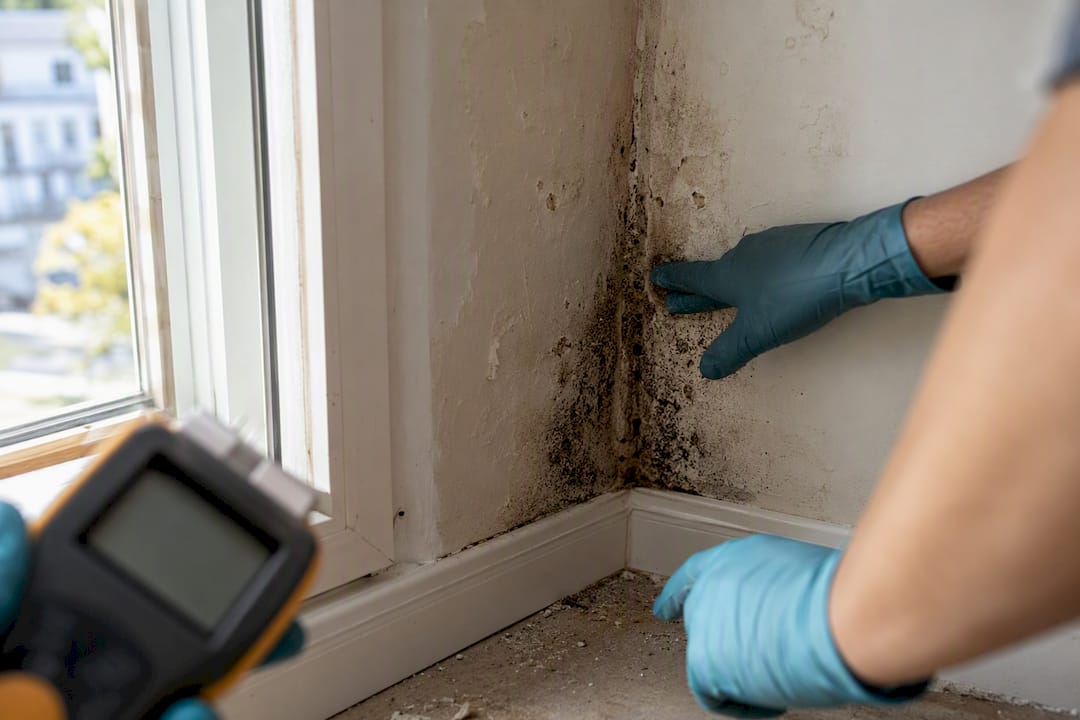
This is also where moisture mapping earns its reputation. Thermal imaging and moisture meters find wet wall cavities and subfloor pockets that look bone dry on the surface. Some materials, like soaked insulation or a wet underpad, need to come out entirely. Others can be dried in place if you catch them early enough. Restoration teams that document drying logs and moisture readings day by day are the ones that catch hidden pockets before they turn into a mold remediation job, and you can read more on how fast mold actually spreads after water damage if you want the fuller timeline.
What Do Insurance Companies Expect When You File a Burst Pipe Claim?
Your camera roll is your best friend during a claim. Photograph and video the damage before any major cleanup starts, and keep building that photo log with timestamps as drying progresses, not just on day one.
- Save every receipt. Emergency plumber invoices, equipment rentals, temporary housing costs, and any professional moisture or drying reports all count as mitigation evidence.
- Know what’s typically covered. Sudden and accidental water damage is generally covered under a standard homeowners policy, while damage tied to neglect or deferred maintenance, like an old pipe you knew was corroding, often isn’t.
- Put everything in writing with your adjuster. Email summaries of calls, attach your photo log, and hand over any drying reports from a restoration company. Claims move faster and pay out more reliably when homeowners document mitigation steps thoroughly rather than relying on a verbal description of what happened.
How Can You Prevent a Burst Pipe Before It Happens?
Most burst pipes trace back to one of three causes: freezing, corrosion, or pressure that built up faster than the pipe could handle. All three are largely preventable with a bit of seasonal maintenance.
- Wrap exposed pipes in foam sleeve insulation, especially in crawl spaces, attics, and exterior walls.
- Seal gaps around your foundation and crawlspace vents, and keep the thermostat above 55°F during cold snaps, even when you’re away.
- Disconnect and drain exterior hose bibs before the first freeze, and consider a pressure regulator or expansion tank if your water pressure runs consistently high.
A pipe clamp or rubber patch can buy you a day or two in a pinch, but treat it as exactly that: a stopgap, not a fix. Schedule the permanent repair right away.
Pro Tip: Smart water shutoff devices that sense a sudden pressure drop and cut the main automatically are worth the investment if you travel often or own a rental property.
What Does a Professional Restoration Team Actually Do Differently?
DIY mitigation buys you time. It doesn’t replace the equipment and documentation a licensed restoration crew brings to a burst pipe, especially once water has gotten into walls, subfloor, or insulation.
A professional workflow typically includes:
- Emergency water extraction and containment within hours of the call, day or night.
- Moisture mapping with thermal imaging to locate wet cavities that aren’t visible from the surface.
- Placement of commercial air movers and dehumidifiers, with daily monitoring logged in writing.
- Targeted demolition of materials that can’t be dried, followed by reconstruction.
- Direct coordination with your insurance adjuster using the drying logs as proof of mitigation.
A written moisture report and drying log does more than track humidity numbers. It’s the paper trail that shows an insurer exactly when a space returned to a safe moisture level, and it’s often the difference between a claim that pays for mitigation only and one that also covers reconstruction.
That level of documentation is hard to replicate with a box fan and a rented dehumidifier, no matter how diligent you are about checking on it.
Act fast, then get it in writing
The single biggest lever you have after a burst pipe isn’t skill, it’s speed. Every hour you shave off between the break and full extraction shrinks the area that needs drying and lowers your odds of a mold problem. If water’s hit more than one room, you can’t find the source, or there’s any chance of live electricity in standing water, stop troubleshooting and call a professional. Document as you go. Adjusters trust photos and drying logs far more than a verbal account of what happened.
Get Emergency Help When a Pipe Bursts in Your Home
A garden hose and a shop vac only get you so far once water’s behind the drywall. Infinity Restoration runs 24/7 emergency response across the Orlando area, which means a crew with moisture meters and commercial-grade extraction equipment can be on-site while you’re still deciding whether the guest room carpet is salvageable.

Every job starts with the same priorities covered in this guide: stop the water, protect the structure, and document everything. The difference is that Infinity Restoration’s team maps moisture behind walls and under flooring with the same equipment described above, then hands you a written drying log your insurance adjuster can act on instead of a verbal summary. That documentation often speeds up claim approval and helps confirm the reconstruction costs the loss actually justifies. If you’re dealing with a burst pipe right now, call for emergency dispatch or request an assessment through the water damage restoration page and get a crew moving before hour one turns into day two.
Sources
- EPA — Mold, Moisture and Your Home
- Family Handyman — What to Do When a Pipe Bursts
- Progressive — What to Do When Pipes Burst
- Eagle Restoration — Burst Pipe Water Damage: Your 2026 Emergency Response Guide