
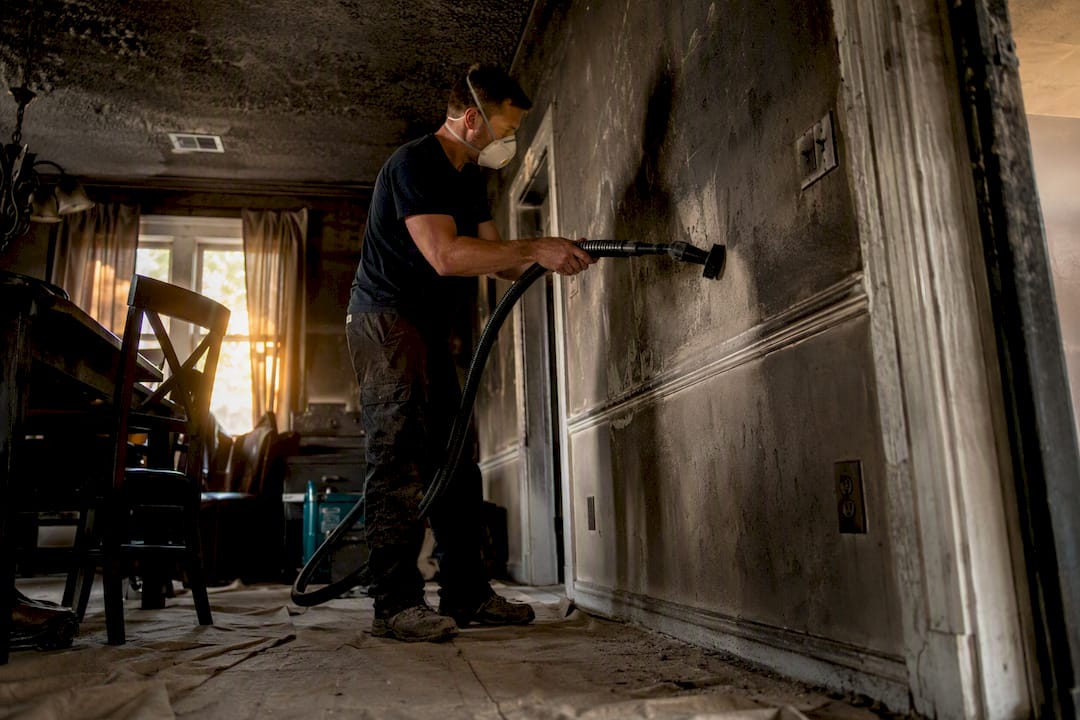
Get people out if the air is bad, then put on a mask and gloves before touching anything. Turn off the HVAC system so it stops pulling soot through every room, and crack windows on a calm day to start clearing the air. Skip the sponge and bucket at first. Every restoration guide agrees on one rule: soot cleanup after fire starts dry, not wet, and if the residue covers more than a room or two, or you still smell smoke after cleaning, stop and call a professional.
TL;DR:
- Soot cleanup should always begin with thorough drying and ventilation, with the HVAC system turned off to prevent spreading soot through ducts.
- Dry cleaning with HEPA vacuums and chemical sponges must be completed before wet cleaning to avoid smearing oily soot into porous surfaces.
- Wet cleaning treatments should be performed only after testing and spot cleaning small areas to prevent damaging materials or spreading contamination.
- Heavily contaminated porous materials and large-scale soot spread typically require professional restoration, especially if odor persists or soot reaches multiple rooms.
- Continuous use of HEPA air scrubbers and odor absorbents is necessary for proper smoke odor removal, and ducts should be inspected if odors return shortly after cleaning.
Table of Contents
- What Should You Do First for Soot Cleanup After Fire?
- Why Does Dry Cleaning Come Before Wet Cleaning?
- When Is It Safe to Move to Wet Cleaning?
- How Do You Clean Soot from Different Surfaces?
- How Do You Get Rid of Smoke Odor After Cleanup?
- When Should You Call a Professional Restoration Company?
- A Field Note on Getting the Sequence Right
- Get Emergency Help for Fire and Smoke Damage
- Sources
What Should You Do First for Soot Cleanup After Fire?
Before you touch a rag or a vacuum, get your gear on. Soot particles are small enough to lodge deep in your lungs, and the residue itself can carry chemical irritants depending on what burned.
Here’s the triage checklist for the first hour:
- Put on an N95 mask or better, plus goggles, long sleeves, and rubber or nitrile gloves.
- Open windows and run fans to push air outward, but only after you’ve switched off the HVAC system so soot doesn’t travel through the ducts.
- Keep electrical appliances off, especially anything near wet ceilings, damaged outlets, or exposed wiring.
- Pull salvageable items out of the contaminated zone and bag anything heavily coated in soot for separate handling.
- Photograph every affected room and item before you clean, since insurers want to see the damage as it happened.
The EPA’s home guidance treats ventilation as a first-line defense against smoke and soot exposure indoors, not an afterthought. That framing matters because a lot of homeowners want to jump straight to scrubbing, and scrubbing before the air is under control just kicks particles back into circulation.
Pro Tip: Snap wide shots and close-ups of every room before you move a single item. Adjusters move faster when the damage is documented room by room, not described from memory two weeks later.
Why Does Dry Cleaning Come Before Wet Cleaning?
Soot is oily by nature. Add water too early and that oil smears into drywall, grout, and fabric instead of lifting off, which is why the dry-first approach is the single most important habit in soot removal from walls and every other surface in the house. Once soot bonds to a porous material, no amount of scrubbing brings it back out.
Two tools handle most of the dry work:
- HEPA vacuum. Use a soft brush attachment, hold it just off the surface rather than pressing down, and work top to bottom so falling particles land on areas you haven’t cleaned yet.
- Dry chemical sponge. Wipe in one direction only, never back and forth, and when the face darkens, slice off that layer or flip to a clean side. A saturated sponge just redistributes soot instead of picking it up.
Ceilings and high corners deserve extra patience. Soot settles heaviest where smoke first pooled, and aggressive scrubbing up there sends particles raining down on surfaces you’ve already cleaned. Local health guidance from the Los Angeles County Public Health fact sheet specifically warns against washing walls until they’re fully dry-cleaned and spot tested.
Pro Tip: Work in sections about the size of a doorway, dry-clean it completely, and move on. Chasing the whole wall at once is how homeowners end up smearing soot they already lifted.
When Is It Safe to Move to Wet Cleaning?
Once the loose soot is gone, wet cleaning handles what’s left behind, but only after you’ve tested a hidden patch, like the back of a closet wall or the underside of a shelf, to see how the surface reacts.
Start gentle and escalate only if you need to:
- Warm water with a few drops of mild dish soap handles light residue on painted walls and trim.
- Trisodium phosphate (TSP) or a TSP substitute tackles heavier grease and smoke film, mixed exactly per the label.
- The American Red Cross cites a stronger dilution of a few tablespoons of TSP plus a cup of household cleaner per gallon of water for tougher jobs, always applied after a spot test.
- Wash one small section at a time, rinse immediately with clean water, and dry the area before moving to the next.
TSP is caustic. The Red Cross is direct about wearing gloves and eye protection and following label instructions to the letter, and that caution applies whether you’re cleaning a wall panel or a windowsill. Keep the room ventilated while you work; the fumes from stronger cleaners build up fast in a closed space.
How Do You Clean Soot from Different Surfaces?
Soot removal from walls is only part of the job. Fabric, carpet, and appliances each have their own limits, and pushing past those limits usually means replacement instead of restoration.
- Walls and ceilings: Dry-clean fully, then damp-wipe if needed. Flat paint and bare drywall can hold a faint shadow even after cleaning, so plan on a stain-blocking primer before repainting.
- Porous materials generally: Drywall, unsealed grout, and unfinished wood absorb soot the longer it sits wet. Over-wetting drives residue deeper rather than lifting it out.
- Fabrics and upholstery: Vacuum first with a soft brush, spot test any cleaner, and send heavily contaminated pieces to a professional upholstery or dry cleaner rather than risk setting the odor permanently.
- Carpets: Light contamination responds to low-pressure extraction cleaning. Carpet soaked in oily soot usually needs replacing, since the padding underneath holds odor no surface treatment reaches.
- Appliances, dishes, and cookware: Discard any open or unsealed food. Nonporous items like glass, ceramic, and metal cookware typically clean up fine with hot, soapy water and a thorough rinse.
How Do You Get Rid of Smoke Odor After Cleanup?
Smell is the last thing to leave and often the first sign something was missed. Ventilation and HEPA air scrubbers do the heavy lifting here, pulling fine particles out of the air that surface cleaning never touches.
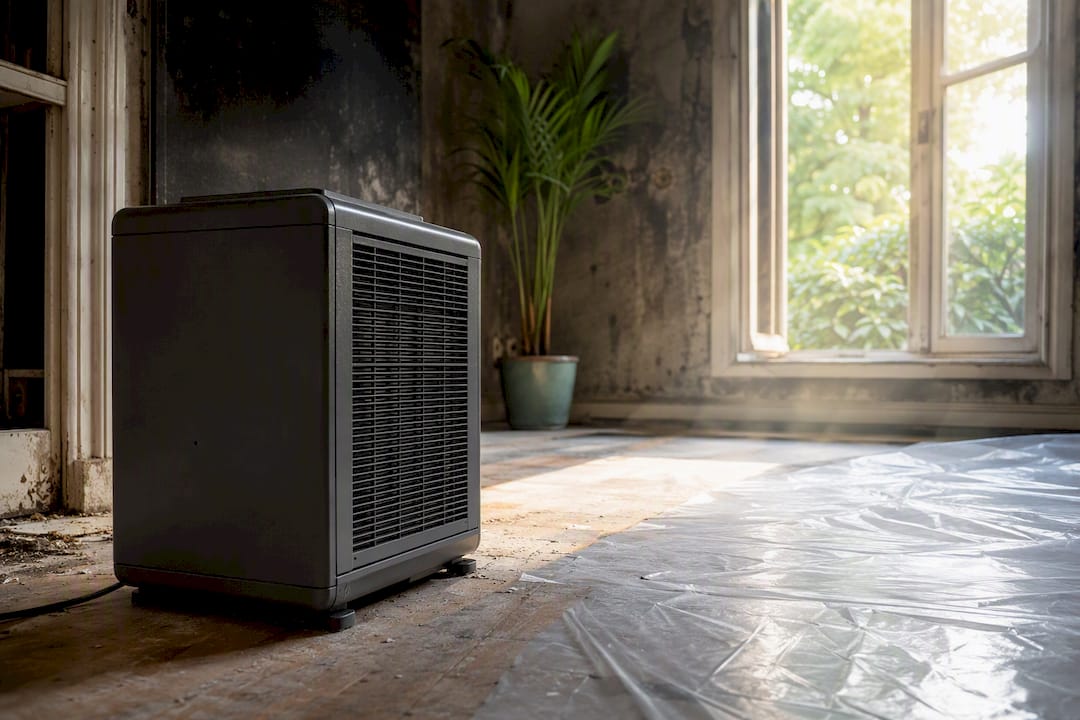
For localized odor, activated charcoal and open boxes of baking soda placed in closets, drawers, and corners absorb lingering smell over several days. Stronger cases call for equipment most homeowners don’t own: thermal fogging, hydroxyl generators, or professional odor encapsulation treatments that neutralize smoke molecules rather than masking them.
Persistent odor after a full cleaning pass usually means the HVAC system or the ductwork is holding contamination. The Red Cross notes that hidden spaces like wall cavities and duct runs can trap smoke long after visible soot is gone, which is exactly the scenario that calls for a technician rather than another can of odor spray.
- Run HEPA air scrubbers continuously in affected rooms for the first several days.
- Place baking soda or activated charcoal in enclosed spaces like cabinets and closets.
- Have ducts inspected if odor returns within a day or two of airing the house out.
When Should You Call a Professional Restoration Company?
DIY works for a single scorched room with light, surface-level soot. It stops working the moment soot has traveled through the HVAC system, covers more than a couple of rooms, or the smell comes back after you’ve already done the dry-and-wet cleaning correctly. Water used to fight the fire adds another wrinkle: standing moisture behind walls creates mold risk on a timeline measured in days, not weeks.
Professional crews bring equipment homeowners don’t have access to: negative-air containment, commercial HEPA filtration, and the ability to get behind baseboards, drywall, and ceiling cavities without guessing where contamination stops. A company built for this work also documents everything in real time, which speeds up insurance claims instead of leaving you to reconstruct damage from memory. You can see the full restoration process most licensed crews follow from first inspection to final repair.
| DIY-appropriate | Call a professional |
|---|---|
| One room, surface soot only | Soot in HVAC or multiple rooms |
| Odor clears after cleaning | Odor persists after cleaning |
| No standing water | Water damage present, mold risk |
| Hard, nonporous surfaces | Heavy contamination on porous materials |
Before hiring anyone, ask about licensing, insurance coverage, the scope of work in writing, an estimated timeline, and whether they provide documentation formatted for your insurance adjuster. A licensed mold assessor on staff matters more than it sounds like it should, since fire damage and hidden moisture problems overlap more often than homeowners expect.
A Field Note on Getting the Sequence Right
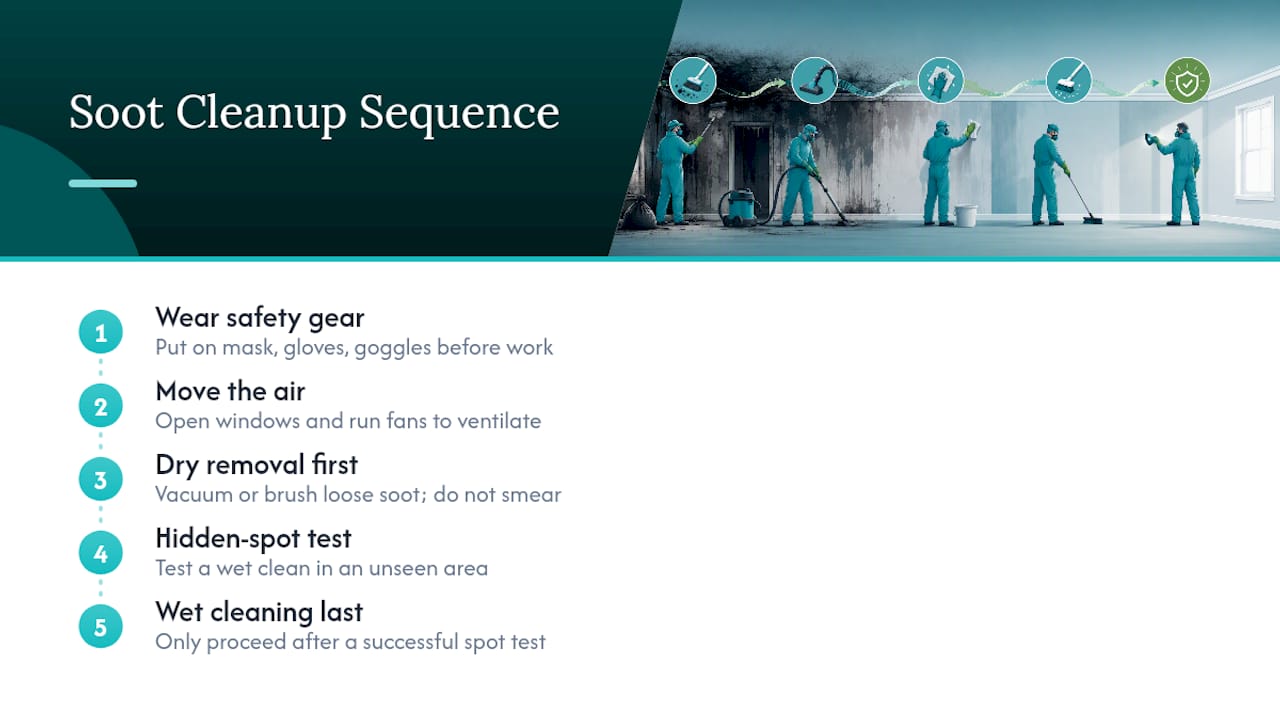
Homeowners almost always want to skip straight to scrubbing, and I understand the instinct. Soot looks like something you should be able to wipe away in an afternoon. The truth is the sequence matters more than the elbow grease: safety gear on, air moving, dry removal first, wet cleaning only after a hidden-spot test. Skip a step and you’re not saving time, you’re smearing the problem into materials that won’t let go of it.
The other habit worth building is documentation. Photograph rooms before you touch them, keep receipts for anything you buy for cleanup, and cover salvageable items rather than moving them through contaminated air. None of that is glamorous work, but it’s what separates a smooth insurance claim from a drawn-out argument over what actually happened.
If you take one thing from this, let it be patience with the order of operations. Rushing wet cleaning onto dry soot is the single most common mistake I see, and it’s the one that turns a cleanable wall into a replaced one.
— Nate
Get Emergency Help for Fire and Smoke Damage
Infinityrestoration handles the soot cleanup after fire that goes past what a mop and a can of degreaser can fix, including duct contamination, hidden moisture behind walls, and odor that won’t quit. What sets the service apart from calling a general handyman is the combination: moisture mapping to find water pockets before they turn into mold, a Florida Licensed Mold Assessor on the team, and real-time documentation built for insurance claims, not scrap notes on a clipboard.

The crew runs 24/7, which matters because soot and lingering moisture do more damage every hour they’re left alone. Infinityrestoration also handles the full range of fire and smoke restoration work for Orlando homes and businesses, from initial containment through structural repair.
Have your address, insurance policy number, and a rough sense of which rooms and materials were affected ready when you call. If your situation involves standing water from firefighting efforts, mention that up front, since it changes the response plan. Call the emergency line now or start with the fire damage restoration process to see exactly what happens after Infinityrestoration arrives.
Sources
- EPA — Home
- Cleaning Up After A Fire — American Red Cross
- How to Clean Smoke and Soot from a Fire — Los Angeles County Public Health (fact sheet)