

A protein fire happens when meat, fish, poultry fat, or dairy smolders and burns on a stove or grill, releasing an invisible, oily residue instead of visible smoke. Homeowners can handle light surface cleaning, HEPA vacuuming, and airing out a single room. But once the odor reaches other rooms, the HVAC system, or fabrics, thermal fogging and hydroxyl treatment from a licensed restoration company become necessary.
TL;DR:
- Protein fire residue spreads through ductwork and porous materials long before odors become noticeable in other rooms, often requiring professional inspection and cleaning.
- Standard household cleaners are ineffective because they spread or smear fat-based residue, making alkaline and enzyme-based solutions essential for proper removal.
- Odor elimination depends on chemically breaking down molecules with tools like thermal fogging, hydroxyl generators, or activated carbon, not just masking scents.
- HVAC systems often disseminate residue throughout the house, necessitating thorough inspection, cleaning, and system remediation by trained professionals before deodorization.
- Professional restoration services with 24/7 emergency response, advanced moisture mapping, and real-time documentation are critical to preventing prolonged odor issues and ensuring proper claim processing.
Table of Contents
- What Is Protein Fire Cleanup and Why Does It Differ From Soot Removal?
- What Should You Do Immediately After a Protein Fire?
- Why Won’t Normal Cleaners Remove Protein Residue?
- How Do You Get Rid of the Smell for Good?
- Can Your HVAC System Spread Protein Fire Odor Through the Whole House?
- What Happens to Your Belongings and Textiles?
- How Long Does Cleanup Take and What Does It Cost?
- When Should You Stop DIY Cleanup and Call a Professional?
- What Sets a Qualified Restoration Company Apart on These Jobs?
- The Priority Order That Actually Prevents Bigger Losses
- Get Help Fast When a Protein Fire Gets Out of Hand
- Sources
- FAQ
What Is Protein Fire Cleanup and Why Does It Differ From Soot Removal?
Protein fire cleanup means removing a nearly invisible, sticky film left behind when animal fat or protein burns at low heat, rather than scrubbing away the dark, powdery soot from a typical structure fire. That film behaves less like ash and more like varnish. It coats cabinets, walls, and appliances in a thin layer you can barely see, then bonds to the surface as it cools.
The rancid, meaty odor is usually the first clue something is wrong, often before anyone notices visible discoloration. The smell tends to grow stronger when the room warms up, which is why a kitchen that seemed fine in the morning can reek by afternoon.
A few checks help confirm what you’re dealing with:
- Run a finger along upper cabinets or trim near the stove. A greasy, yellow-brown film that smears rather than wipes off clean points to protein residue.
- Close the kitchen door for twenty minutes, then reopen it. A sharp, sour smell that hits you immediately suggests the residue has saturated nearby surfaces.
- Check air vents in rooms away from the kitchen. If the odor is noticeable there too, particles have already traveled through the ductwork.
- Look at fabric items like curtains or upholstered chairs near the cooking area. Porous materials absorb this residue fast and hold onto the smell longest.
Fine airborne particles from a protein fire spread further than most people expect, settling into insulation, fabric fibers, and wall cavities long before anyone smells trouble in another room.
What Should You Do Immediately After a Protein Fire?
Confirm the fire is completely out and the structure is safe to occupy before doing anything else. If there’s any doubt about electrical damage or structural integrity, wait for a fire department clearance.
Once it’s safe, take these steps in order:
- Open exterior doors and windows for cross ventilation, but only if outside air quality and weather allow it.
- Shut off the HVAC system at the thermostat or breaker immediately. Running it recirculates residue through every duct in the house.
- Remove and bag perishable food from the kitchen, since spoiled contents add a second odor problem on top of the fire residue.
- Photograph every affected room and surface before touching anything, for insurance documentation.
- Isolate the kitchen and adjacent rooms by closing doors to slow the spread to unaffected areas.
Avoid these common mistakes. Don’t wipe surfaces with water or all-purpose cleaner. The moisture tends to smear the protein film deeper into paint, wood grain, and grout rather than lifting it. Don’t restart the HVAC system to “clear the smell.” That’s one of the fastest ways to contaminate an entire home from a single-room fire. And don’t machine-wash smoke-contaminated fabrics with regular detergent, since household cleaning products can push contaminants deeper into fibers instead of releasing them.
For any hands-on task, wear nitrile gloves, eye protection, and an N95 or P100 respirator. Residue particles are small enough to irritate lungs during even brief cleanup work.
Pro Tip: Keep a running photo log on your phone from the first hour onward. Insurers move faster on claims when the damage timeline is documented before cleanup starts, not reconstructed afterward.
Why Won’t Normal Cleaners Remove Protein Residue?
Standard glass cleaner or all-purpose spray relies on water and mild surfactants, which aren’t built to break down a fat-based film. Water tends to spread the residue rather than lift it, working it into pores, grout lines, and clear-coat finishes where it becomes far harder to remove later.
Professional alkaline and enzyme-based cleaners work differently. Alkaline formulas break down the fat molecules chemically instead of just wiping them around, while enzyme digesters target the organic proteins directly, similar to how enzyme cleaners handle pet stains or grease traps.
The typical professional sequence looks like this:
- HEPA vacuum every surface first to lift loose particulate before introducing any liquid, since wet cleaning over dry residue just spreads it.
- Use dry soot sponges on lightly affected walls and ceilings to pull away surface film without moisture.
- Apply alkaline or enzyme cleaner to a small hidden test spot, wait several minutes, and check for discoloration before treating the full surface.
- Work in controlled sections with the correct cleaner-to-surface match, rinsing minimally and drying fast to prevent streaking.
- For structural wood too damaged to clean chemically, use media or soda blasting to remove the charred and saturated layer entirely.
Surface type changes the approach considerably. Painted drywall usually responds well to alkaline cleaning if caught early. Varnished cabinetry needs gentler enzyme treatment since aggressive alkaline products can strip the finish along with the residue. Stainless steel and laminate countertops clean up fastest, while grout and unsealed stone tend to hold odor the longest because the residue works into microscopic pores.
One detail surprises most homeowners: a room can look completely clean and still fail a smell test days later, because the film is often invisible to the eye even when it’s still chemically present on the surface. That’s the entire reason spot-testing and methodical sequencing matter more here than in ordinary soot cleanup.
How Do You Get Rid of the Smell for Good?
Spraying air freshener over protein fire odor doesn’t work because you’re not removing anything. You’re just adding a second smell on top of a chemical residue that’s still sitting in your walls, fabric, and ductwork. Odor elimination requires breaking down the actual molecules causing the smell, not covering them up.
Restoration crews typically use a mix of these tools, chosen based on how deep the contamination goes:
- Thermal fogging heats a deodorizing agent into a fine fog that follows the same air currents and penetration paths the original smoke traveled, reaching residue trapped behind trim, in cracks, and inside cabinetry.
- Hydroxyl generators produce hydroxyl radicals that break odor molecules apart chemically. They’re safe to run with people and pets present, which makes them the default choice for occupied homes.
- Ozone generators work faster in heavy contamination but require the space to be fully vacated during treatment, since ozone is harmful to breathe.
- Activated carbon and HEPA filtration capture airborne volatile organic compounds and fine particulates that fogging and hydroxyl treatment leave floating in the air.
Sequence matters as much as the tools themselves. Technicians generally clean and vacuum surfaces first, then deploy fogging or hydroxyl treatment last, so the deodorizer isn’t wasted neutralizing residue that a HEPA pass could have removed mechanically.
Pro Tip: If a room still smells faintly “off” after surface cleaning, don’t assume it needs another round of scrubbing. That lingering smell usually means the odor has moved into the air and soft materials, which calls for hydroxyl or fogging treatment rather than more wiping.
Can Your HVAC System Spread Protein Fire Odor Through the Whole House?
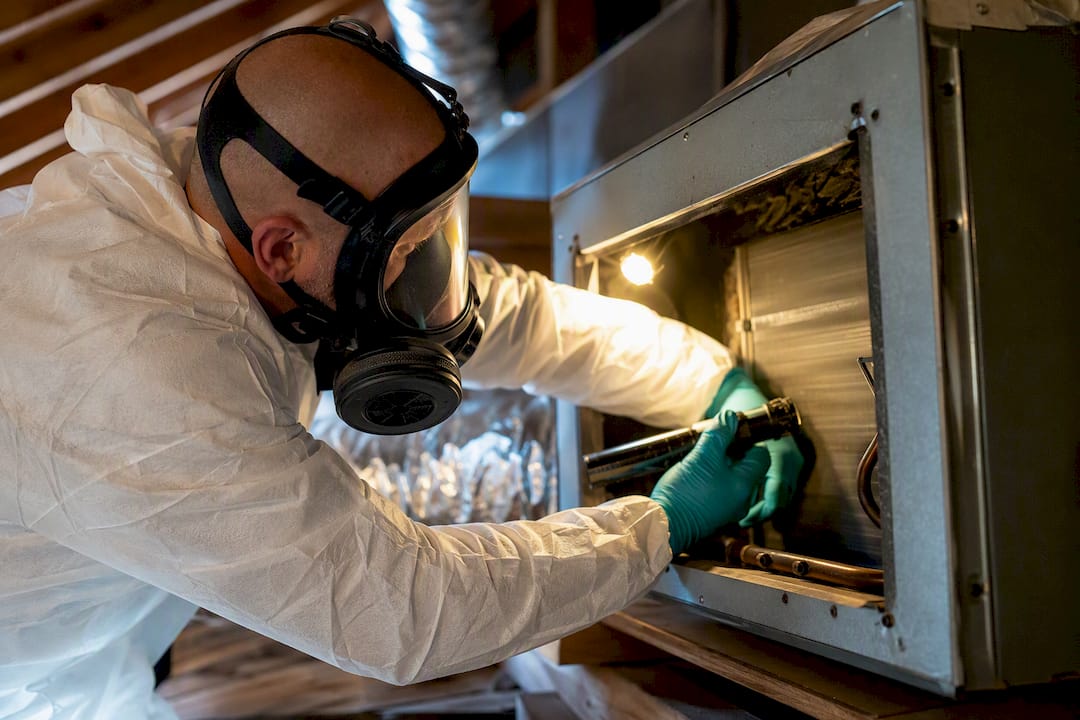
Yes, and it’s one of the most common reasons a single-kitchen fire ends up smelling like it happened in every room. Residue particles get pulled into return vents, then coat the coils, plenum, and duct interior on their way through the system. Every time the blower kicks on, it redistributes whatever’s stuck in there.
HVAC components almost always need inspection after a protein fire, even if the fire itself stayed contained to the kitchen. Technicians typically follow this process:
- Deploy HEPA air scrubbers in affected rooms first to pull contaminated particulate out of circulation before touching the ductwork.
- Inspect coils, plenums, and accessible duct runs visually, sometimes backed by particle testing to confirm contamination levels.
- HEPA vacuum duct interiors and clean coils directly, since residue clings to condensation on evaporator coils particularly well.
- Replace every filter in the system, and evaluate whether flexible ductwork needs sealing or full replacement if saturation is severe.
Crews generally isolate and clear the HVAC system before starting whole-home deodorization. Fogging or hydroxyl treatment applied while a contaminated system is still running just reintroduces the smell they’re trying to remove. This is not a project for a homeowner with a shop vacuum. Duct interiors are tight, often inaccessible, and cleaning them incorrectly can push residue further into the system instead of out.
What Happens to Your Belongings and Textiles?
Hard goods generally survive. Furniture, most electronics, and non-porous decor items can usually be cleaned and returned. Food, open containers, and porous insulation almost always need to be thrown out, since they absorb odor at a level no cleaning process reverses affordably.
Here’s how professionals typically triage contents:
- Sort items on-site into salvageable, questionable, and discard categories, photographing each before it leaves the property.
- Pack out salvageable soft goods, clothing, and delicate items for off-site cleaning using ultrasonic or ozone chambers designed for smoke-contaminated fabric.
- Evaluate carpets and rugs in place first. Light contamination can sometimes be treated on location, but heavy saturation near the fire source usually means replacement is cheaper than restoration.
- Label every packed item with room of origin and condition notes so nothing gets lost in the chain of custody between pickup and return.
- Keep an itemized list matched to your insurance claim, since adjusters move faster when contents are documented rather than described after the fact.
How Long Does Cleanup Take and What Does It Cost?
Timeline and cost swing widely depending on how far the residue traveled. A single contaminated room with no HVAC involvement might wrap up in a few days. Add ductwork, multiple rooms, or water damage from firefighting efforts, and you’re looking at one to several weeks.
Cost ranges follow the same pattern: minor jobs limited to surface cleaning and deodorization in one room typically cost several thousand dollars, while cases involving full HVAC remediation, contents pack-out, and partial demolition may cost significantly more.
A few factors drive that range up or down:
- How far the residue spread before anyone caught it, including whether HVAC ductwork needs cleaning or replacement.
- Whether water damage from extinguishing the fire complicates the job with drying and mold prevention on top of odor removal.
- How much of the contents need off-site pack-out versus in-place cleaning.
- Whether demolition of charred structural material is necessary before rebuild work can begin.
Notify your insurer as soon as the scene is safe. Early documentation and a fast professional assessment tend to move claims through faster than waiting until cleanup is already underway.
When Should You Stop DIY Cleanup and Call a Professional?
Certain signs mean it’s time to stop trying to handle this yourself. Watch for:
- Odor that’s noticeable in rooms away from the kitchen, especially near air vents.
- A smell that returns or gets stronger after the room warms up, even after you’ve cleaned visible surfaces.
- Any porous material, drywall, insulation, or fabric, that still smells strongly after a wash or wipe-down.
- Water damage from firefighting efforts on top of the fire itself.
A qualified inspection should produce a written safety assessment, a documented scope of work, moisture mapping if water was involved, an HVAC evaluation, and a detailed estimate your insurer can work from directly. Look for a company following IICRC-standard restoration practices with 24/7 emergency response and real-time documentation, since that combination speeds up both the cleanup and the claims process.
Confined-space duct cleaning and coil work inside an HVAC system isn’t a do-it-yourself task. The tools and access points involved carry real injury risk, and improper cleaning can spread contamination instead of removing it.
What Sets a Qualified Restoration Company Apart on These Jobs?
Not every contractor is equipped to handle protein fire contamination correctly, and the gaps usually show up after the “cleanup” is done and the smell comes back. A few markers separate a thorough job from a rushed one:
- 24/7 emergency response limits how far residue spreads before mitigation starts, which directly shortens both the timeline and the final bill.
- Advanced moisture mapping catches hidden water damage from firefighting efforts that a visual inspection alone would miss, preventing a second mold problem down the line.
- A licensed mold assessor on staff matters specifically because fire and water damage frequently overlap, and mold growth behind drywall can go undetected for weeks without proper testing.
- Real-time documentation during the job keeps your insurance claim moving without the delays that come from reconstructing damage details after the fact.
The Priority Order That Actually Prevents Bigger Losses
Homeowners lose time chasing the smell before they’ve secured the basics. Safety first: confirm the structure is sound and the fire is out. Then containment: kill the HVAC before anything else, because every hour it runs is another hour of contamination spreading to rooms that were never touched by the fire itself.
Only after that should cleaning and deodorization start, in that order. Skipping straight to air freshener or a bucket of soapy water almost always makes the actual removal job harder and more expensive later. If the odor has reached a second room or the ductwork, that’s the line where calling a professional stops being optional caution and becomes the only way to actually solve the problem.
— Nate
Get Help Fast When a Protein Fire Gets Out of Hand
Protein fire residue doesn’t wait for a convenient time to spread, and neither should your response. Some restoration companies run 24/7 emergency service, which means a technician can start containment and documentation quickly, before residue works deeper into cabinetry, ductwork, or fabric.

What makes the first visit different from a general handyman cleanup is the diagnostic work up front. Some restoration teams use advanced moisture mapping to catch water damage from firefighting efforts that a visual check would miss, often supported by a licensed mold assessor so a hidden mold problem doesn’t surface months later. Every step can be documented in real time, which keeps insurance claims moving instead of stalling on missing paperwork.
If your kitchen fire has left more than a faint smell behind, start with the fire damage restoration page to see the full scope of service, or go straight to emergency services to request immediate response.
Sources
- Full guide — Fire damage restoration | The Home Depot
- Determining the Invisible Fire: Smoke and Fire Restoration Strategies to Protein Residue – Meregate
FAQ
What is a good product for cleaning fire soot?
For light soot, a dry soot sponge works well; for protein residue specifically, alkaline or enzyme-based cleaners outperform general household sprays because they break down the fat-based film instead of smearing it.
How long do toxins stay in the air after a fire?
Airborne particulates and volatile organic compounds can linger for days to weeks depending on ventilation and material involvement, which is why HEPA air scrubbers and activated carbon filtration are used to clear them faster than natural airflow alone.
How much does it cost to clean up after a fire?
Minor, single-room jobs limited to surface cleaning and deodorization often run into the low thousands of dollars, while cases involving HVAC remediation, contents pack-out, or demolition climb substantially higher.
What neutralizes smoke smell after a fire?
Thermal fogging, hydroxyl generators, and ozone treatment neutralize odor at the molecular level, while activated carbon and HEPA filtration clear residual airborne particulates; masking sprays don’t work because they don’t remove the underlying residue.
Can Infinityrestoration handle protein fire odor removal?
Yes, some restoration companies offer 24/7 emergency response for fire damage, including deodorization and documentation for insurance claims in their service area.