
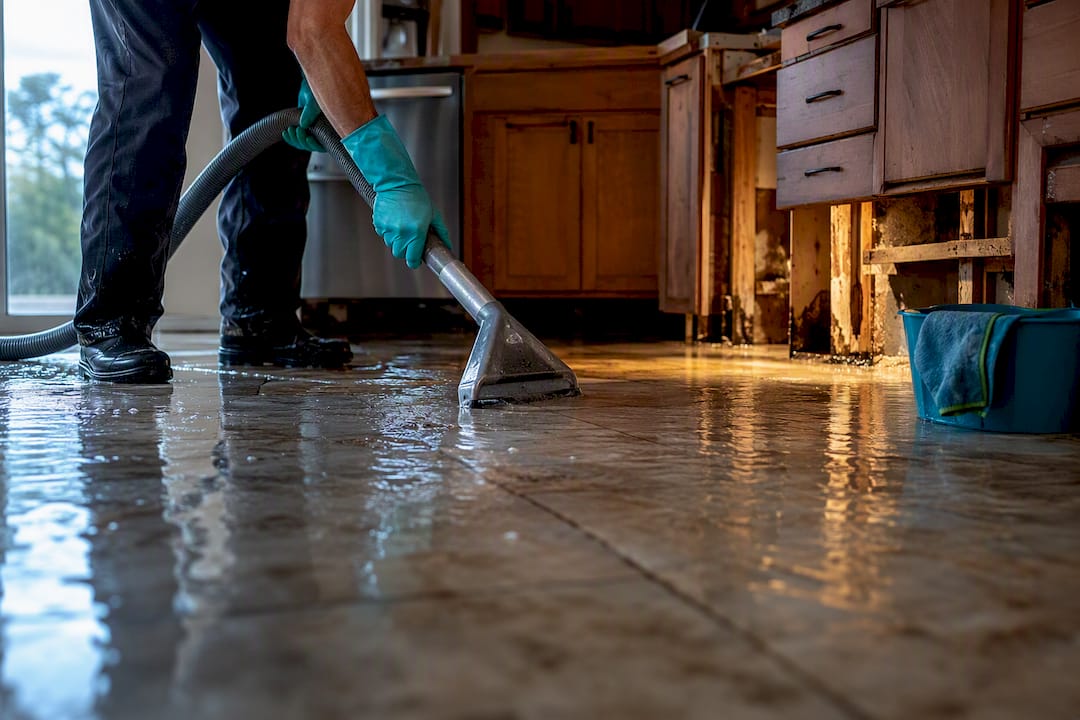
If your home flooded during a hurricane and you could not fully dry it out within 24 to 48 hours, assume mold is already growing. Prioritize safety first: check for structural, electrical, and gas hazards before you walk back inside. Photograph everything for your insurer, then decide fast whether this is a job for a wet vac and box fans or a licensed remediation crew.
TL;DR:
- Mold can begin growing within 24 to 48 hours on wet materials after a flood, especially in humid climates like Florida.
- Significant mold growth behind walls and under flooring often goes unnoticed but can cause health issues, particularly for immunosuppressed individuals.
- DIY cleanup is limited to areas smaller than 10 square feet; larger or contaminated jobs require professional remediation with proper documentation.
- Early and thorough water removal, surface cleaning, and moisture mapping are critical to prevent mold proliferation, especially within the 48-hour window.
- Properly documenting damage and hiring licensed professionals improves insurance claims and ensures safer, more effective mold removal.
Table of Contents
- How Fast Does Mold Grow After a Hurricane?
- Who Is Most at Risk From Post-Storm Mold Exposure?
- When Do You Need a Professional Instead of DIY?
- Safe DIY Cleanup Steps for the First 48 Hours
- How to Prevent Mold When You Rebuild
- Does Insurance Cover Mold Damage After a Hurricane?
- Infinity Restoration’s Approach to Post-Hurricane Mold
- The Gap Between Federal Guidance and What Homeowners Actually Do
- Get Professional Mold Remediation Before It Spreads Further
- Sources
How Fast Does Mold Grow After a Hurricane?
Mold does not wait for you to finish cleaning up storm debris. Under Florida’s heat and humidity, spores that land on wet drywall, carpet padding, or insulation can produce visible colonies within 24 to 48 hours. That window is the entire basis for how fast you need to move. Wait a week to deal with soaked baseboards, and you are no longer preventing mold. You are remediating it.
A few factors decide how bad it gets. Floodwater that sat for days penetrates deeper into porous materials than a quick rain intrusion, and it carries more organic material for mold to feed on. Drywall, carpet, upholstered furniture, and wood framing all hold moisture longer than tile or concrete, which means a flooded living room with wall-to-wall carpet is a bigger risk than a flooded garage with a bare slab.
Hidden growth is the real problem, because a lot of post-hurricane mold never shows itself on a wall you can see. Watch for these signs:
- A musty, earthy smell that lingers even after surfaces look dry
- Discoloration on drywall, baseboards, or ceiling tiles, especially yellow, black, or greenish stains
- Warped or bubbling paint and wallpaper
- Increased allergy symptoms when you are indoors versus outside
- Visible condensation on windows or interior walls days after the storm
Behind-the-wall growth in wet insulation or under flooring often goes undetected until someone opens the wall for repairs. If your home took on any standing water, treat the space behind baseboards and under cabinets as suspect even when the surface looks fine.
Who Is Most at Risk From Post-Storm Mold Exposure?
Most people who breathe in mold spores after a hurricane get off with irritation. Watery eyes, a scratchy throat, coughing, skin irritation, and headaches are common during and right after cleanup, and they usually fade once the exposure stops. For people with asthma or existing allergies, the same exposure can trigger a real flare-up, not just discomfort.
The bigger concern is people who are immunosuppressed, including transplant recipients and patients undergoing chemotherapy. Federal health guidance is direct on this point: immunosuppressed individuals should avoid mold-contaminated sites entirely because they face a genuine risk of invasive mold infection, not just an allergic reaction.
Post-storm data backs up why this matters. Surveys conducted after Hurricanes Katrina, Harvey, and Ida found that 45% to 76% of surveyed homeowners reported seeing or smelling mold in their flooded homes, and PPE use during cleanup was inconsistent at best.
If you or someone in your household falls into a higher risk group, keep an eye on:
- Persistent coughing or wheezing that gets worse indoors
- Sinus pressure or congestion that does not resolve with normal allergy treatment
- Skin rashes appearing after direct contact with wet materials
- Any fever or unusual fatigue in someone who is immunosuppressed, which warrants a call to a doctor right away
When Do You Need a Professional Instead of DIY?
The EPA draws a clear line here. If the affected area is about 10 square feet or less, a homeowner with the right gear can usually handle it. Past that size, you are into professional remediation territory, both for the sake of thoroughness and because larger jobs disturb enough spores to contaminate areas that were previously clean.
Some situations call for professionals regardless of square footage:
- Floodwater contained sewage or other contamination, since the EPA specifically advises against DIY cleanup in these cases due to the added health risk
- Mold has reached inside HVAC ductwork, which can spread spores through the whole house every time the system runs
- You see structural damage to framing, subfloor, or load-bearing walls
- The mold has been growing for more than a few weeks and has spread across multiple rooms
When vetting a remediation company, look for technicians holding IICRC certification, and check whether the company has a state-licensed mold assessor on staff, which Florida requires for mold assessment work separate from remediation. Ask upfront how they document the job for insurance purposes.
Pro Tip: Get a written scope of work and dated photos from any contractor before remediation starts. Insurance adjusters move faster when they have a clear paper trail showing the damage predated the repair.
Safe DIY Cleanup Steps for the First 48 Hours
Do not walk back into a flooded home until you are sure it is structurally safe. Check for sagging ceilings, buckled floors, exposed wiring, and gas odors first. If anything seems off, wait for a professional inspection or your utility company before going further.
- Photograph everything before touching anything. Wide shots of each room, close-ups of damage, and a video walkthrough all help your insurance claim later.
- Gear up before you clean. For light tasks, a NIOSH-approved N95 respirator is the minimum. For heavier work involving demolition or moving saturated materials, an elastomeric or full-face respirator gives better protection than a disposable N95, since a Hurricane Katrina remediation study found spore counts spike during active demolition. Add rubber gloves and goggles regardless of task size.
- Remove standing water fast. A wet vac works for small amounts; a sump pump handles more. Every hour water sits is an hour closer to that 24 to 48 hour mold threshold.
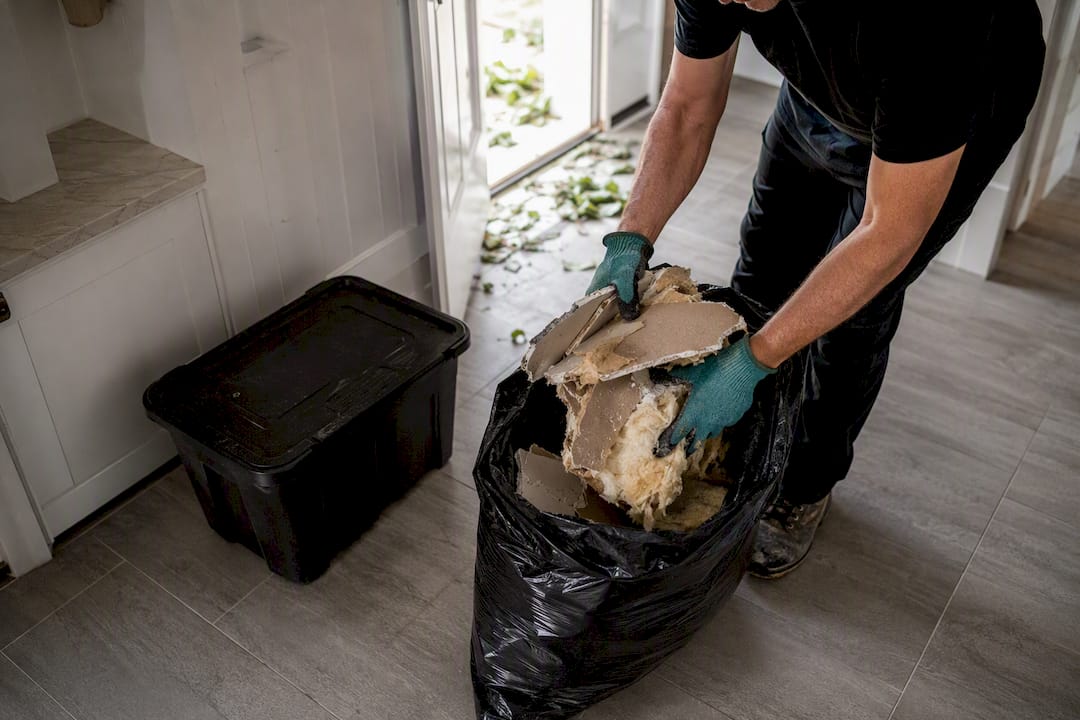
- Pull out anything you cannot dry in time. Saturated carpet, padding, insulation, and drywall that stayed wet more than a day or two should be cut out and bagged for disposal rather than dried in place.
- Set up cross-ventilation. Open windows on opposite sides of the house if outdoor humidity allows it, and run fans and dehumidifiers continuously. Do not run your HVAC system if you suspect contamination, since it will circulate spores through every room.
- Clean hard surfaces with detergent and water first. Bleach kills mold on nonporous surfaces like tile and glass, but it does not reliably reach mold embedded in porous materials like wood or drywall, and it should never be mixed with ammonia-based cleaners.
- Know when to stop. If you are past the 10 square foot mark, if you find contaminated floodwater residue, or if symptoms start during cleanup, stop and call a professional.
Homeowners rarely need mold sampling to confirm what a nose and a flashlight already tell them. Visible growth and a musty smell are enough justification to act. Save lab testing for post-remediation verification, not for deciding whether to start.
Pro Tip: Bag wet drywall and insulation in heavy contractor bags before carrying them through the house. Dragging soaked materials through hallways spreads spores to rooms that were never flooded.
How to Prevent Mold When You Rebuild
Rebuilding after a flood is the moment to make your home more resistant to the next storm, not just restore what was there before. Swap standard drywall for mold-resistant or paperless gypsum board in any area that flooded, and replace wet insulation entirely rather than trying to dry it in place.
Improving exterior drainage, regrading soil away from the foundation, and elevating HVAC equipment or electrical panels in flood-prone areas all reduce how much water gets in next time.
| Prevention Step | Why It Matters |
|---|---|
| Mold-resistant drywall | Slows spore growth if minor leaks occur later |
| Indoor humidity at moderate levels | Keeps conditions inhospitable for mold |
| Improved exterior drainage | Reduces water intrusion during future storms |
| Elevated utilities in flood zones | Limits damage and downtime after flooding |
| Independent post-remediation verification | Confirms the space is safe before reoccupation |
For larger or insurance-sensitive jobs, an independent industrial hygienist can perform post-remediation verification, comparing air and surface samples against an outdoor baseline. That step gives you documented proof the space is clear, which matters if a buyer, insurer, or family member with health concerns ever asks.
Does Insurance Cover Mold Damage After a Hurricane?
Document damage before you clean anything up. Photos, videos, and an itemized list of ruined belongings all strengthen your claim, and you should keep every receipt from remediation contractors as well.
Coverage depends heavily on your policy type:
- Standard homeowners insurance often excludes mold unless it resulted directly from a covered peril, like a burst pipe or storm-created roof leak
- Flood insurance through the National Flood Insurance Program covers flood-related damage differently than a standard policy, and mold exclusions vary by endorsement
- FEMA disaster assistance is limited and conditional on an active disaster declaration for your county, and it typically will not fully cover mold remediation costs
Bring documentation from a licensed remediation company to your adjuster. It carries more weight than homeowner photos alone.
Infinity Restoration’s Approach to Post-Hurricane Mold
Infinityrestoration keeps a Florida Licensed Mold Assessor on staff, which matters when you need an accurate read on how far contamination has spread before remediation starts. The team uses moisture mapping to find water trapped behind walls and under flooring that a visual inspection alone would miss, and that data shapes exactly which materials get removed versus dried.
For homeowners dealing with the professional-threshold situations covered above, here is what that looks like in practice:
- 24/7 emergency response to start water extraction before the 24 to 48 hour mold window closes
- Moisture mapping to locate hidden saturation behind drywall and under subfloors
- Proper containment and PPE protocols for contaminated floodwater situations
- Real-time documentation built specifically to support insurance claims
The Gap Between Federal Guidance and What Homeowners Actually Do
The EPA and CDC guidance on mold after a hurricane is solid, detailed, and free. The problem is not the information. It is that almost nobody follows it under real conditions. You are exhausted, your power might be out, and you are trying to salvage photo albums while a government PDF tells you to wear an elastomeric respirator you do not own and probably cannot buy at your local hardware store during a post-storm run.
That gap between guidance and reality is where most preventable mold problems actually start. People know they should dry things out fast. They do not always have the pumps, dehumidifiers, or spare labor to do it inside 48 hours, especially when an entire neighborhood is competing for the same rental equipment.
My honest read: the 10 square foot EPA threshold is the right line, but most homeowners underestimate how fast a small wet spot becomes ten square feet once you account for what is happening behind the wall. If you are unsure whether you are over that line, you probably are. Call for an assessment before you commit to a DIY plan that gets you halfway there and stalls.
— Nate
Get Professional Mold Remediation Before It Spreads Further
If you are past the point of fans and a wet vac, Infinityrestoration gives Orlando-area homeowners a faster, better-documented path than trying to coordinate rental equipment and guesswork on your own. The team’s moisture mapping finds hidden saturation before it becomes a bigger tear-out, and the Florida Licensed Mold Assessor on staff means your remediation plan is based on an actual inspection, not an estimate.

That matters most when you are also fighting an insurance claim. Infinityrestoration provides real-time documentation throughout the job, so you are not scrambling for proof of damage months later when the adjuster asks for it. Every job runs on 24/7 emergency response, which counts for a lot when you are racing that 24 to 48 hour mold window after a storm.
If your home took on floodwater and you are unsure whether it is a DIY job or not, get a professional mold remediation assessment before you decide. If water is still standing or actively spreading, start with emergency water damage restoration and get extraction underway today.
This article is general information, not a substitute for advice from a qualified doctor. Consult a qualified healthcare professional about your own circumstances before acting on anything here.
Sources
- Mold cleanup in your home | US EPA
- Homeowner’s and renter’s guide to mold cleanup after disasters | CDC
- Flood cleanup demonstration after Hurricane Katrina — Environmental Health Perspectives (PMC)